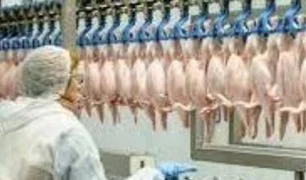
Plant Modernization Case Study
Overview
A chicken processing company had operated for 40 years and was in the middle of a major facility expansion — new production lines, upgraded equipment, and a significantly larger footprint. They had claimed R&D tax credits before, but only on new product development. The idea that a plant expansion could qualify had never crossed their minds. Nearly 95% of the substantive R&D detail lived not with the client but with the general contractor and their subcontractors — a documentation challenge that stops most firms before they start. Sycamore went to the source.
The Client
A chicken processing company with four decades of continuous operation, undergoing a significant capital investment to expand and retool its production facility.
• Food processing — chicken production and packaging
• 40 years in operation
• $56 million total project investment in facility expansion
• Custom-built production equipment specified to company's requirements
• Previously claimed R&D credits on product development only
Multiple industry excellence awards
Preferred vendor in automotive, aerospace, and consumer products industries
Challenges
The client had been told informally that the facility expansion wasn’t worth pursuing for R&D credits. Three factors made the project genuinely difficult.
Documentation lived outside the client’s walls. The general contractor and their subcontractors held nearly all of the substantive project records — draw reports, meeting minutes, issues logs, technical specs, change orders, and trade quotes. The client had bid documents and updated SOPs, but not the engineering details the IRS requires.
Scope and complexity of a construction-driven study. A facility expansion involves dozens of systems, trades, and subcontractors. Organizing that material by subsystem and component — and writing project-level R&D reports that explain the engineering decisions behind each one — requires significant time and technical expertise.
The assumption that expansion work doesn’t qualify. Four decades of accumulated process knowledge was embedded in every engineering decision the company made about the new lines. Most equipment was custom-built to their specifications. Dialing in the equipment, resolving integration issues, and revising SOPs to reflect how the new lines actually performed — all of it qualifies under the four-part test. The company needed someone who understood that and could prove it.
Deliverables
Digital Audit Library with project documentation organized by subsystem and component, and detailed system-level R&D write-ups — how projects were selected and assessed, and why.
Tax Credit Methodology Report documenting how qualified research expenses were identified and calculated for each qualifying category.
Accounting Workbooks with detailed expense breakdowns and qualified cost calculations.
Read Me First document — an orientation guide allowing an IRS auditor to evaluate the merits of the claim quickly.
$30.4 million in qualified research expenses identified out of $56.1 million total project investment.
$3,821,909 in federal R&D credits and $1,890,519 in state R&D credits — $5.71M in total credits.
Customer Quote
“We never thought expanding our production facility would be eligible for R&D tax credits. We’ve been in business 40 years — we didn’t think we’d still have much R&D to claim. We could not be more pleased with Sycamore’s documentation. Not only did we garner significant tax credits — we now have rock-solid documentation and are ready if an audit is ever called.”